
Stock by location
Distinguish available, reserved, damaged and in-transit quantities where the operation requires them.
Inventory management software records where stock is, how much is available and how each movement changes it. We develop stock workflows for receiving, locations, reservations, picking, transfers and counts, with the relevant sales and purchasing systems connected.
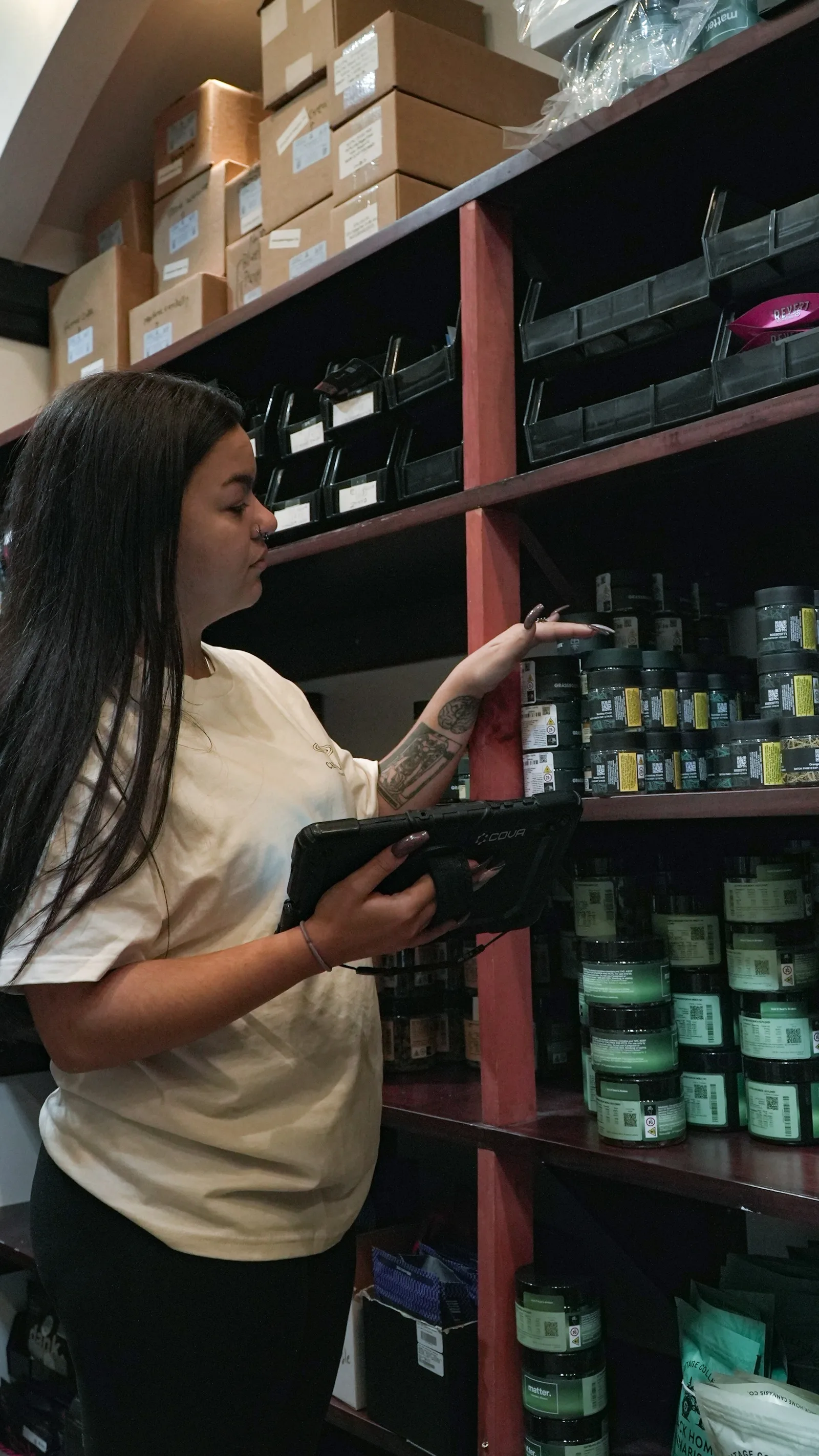
For businesses whose stock figures differ between spreadsheets, stores, warehouses and online channels.
Distinguish available, reserved, damaged and in-transit quantities where the operation requires them.
Trace receipts, sales, returns, transfers and corrections to the event and user responsible.
Show agreed low-stock or purchasing signals without assuming every item needs the same rule.
Connect orders and stock updates to supported ecommerce or EPOS systems.
A warehouse could reserve items for an approved order, record the pick and dispatch, then compare the remaining quantity with the next physical count.
This describes a possible scope, not a claimed client result.An agreed product/location model, movement workflows, permissions, selected integrations and reconciliation tests. Barcode devices, opening-stock preparation and forecasting need explicit scope.
A warehouse or EPOS platform may already cover the need. Build a tailored module when locations, allocation rules or connected workflows exceed its practical configuration.
For an Oman operation, test a Muscat order fulfilled from another stock location, including a partial dispatch or returned item. Agree OMR precision, delivery areas, stock ownership and the provider interfaces actually available to the business.
Optimal Designz is operated by Optimal Design Solutions SMC-PVT Ltd., registered in Pakistan. Delivery arrangements, supported languages, system compatibility and ongoing support are confirmed in the written scope; this country edition does not imply a local office.
Have a similar task in mind? Share your current tools, the people involved and one complete example.
Discuss this requirementWe define the source of truth for stock, how updates flow between systems, how discrepancies are handled and which roles can make changes. The solution may be a custom application, a module or integration with an existing platform.
Define SKUs, units, pack sizes and locations. Distinguish physical stock, reserved quantity and availability for sale before combining warehouse or storefront reports.
Organise product details, variants and identifiers around the catalogue you manage.
Plan how receipts, transfers, reservations, adjustments and returns are recorded.
Consider purchase orders, supplier information and the replenishment rules your team uses.
Include stock locations, transfers and local permissions in the agreed workflow.
Compare recorded quantities with physical counts and review differences.
Define reporting and links to POS, ecommerce or accounting tools.
We define the source of truth for stock, how updates flow between systems, how discrepancies are handled and which roles can make changes. The solution may be a custom application, a module or integration with an existing platform.
Agree where information originates, which system can change it and how updates or failures are handled. A focused integration or configuration may be more suitable than replacing working tools.
A Sohar warehouse and Muscat sales team may need shared availability with controlled transfers and location-specific permissions. Make movement references and adjustment ownership explicit.
Existing software, configuration and integration are considered alongside bespoke development.
Explore the supporting detail after reviewing the capabilities and project choices.
Follow stock from receipt to reservation, transfer, sale and return with inventory software built around your Oman operation.
Define SKUs, units, pack sizes and locations. Distinguish physical stock, reserved quantity and availability for sale before combining warehouse or storefront reports.
Practical answers to help you compare options and prepare for a useful project conversation.
For businesses whose stock figures differ between spreadsheets, stores, warehouses and online channels.
Inventory management software records where stock is, how much is available and how each movement changes it. We develop stock workflows for receiving, locations, reservations, picking, transfers and counts, with the relevant sales and purchasing systems connected.
It is the design or adaptation of stock workflows around the business’s products, locations and sales channels. The result may be a bespoke application, a module or integration with an existing product.
A stock control system manages quantities and availability, while inventory tracking software often records movements and their causes. In practice a reliable solution usually needs both.
It can, if these details are part of the agreed data model. The design should also cover locations, units, returns and the traceability that the actual business requires.
Product IDs, reservations, fulfilment and returns must be mapped between systems. Decide which platform is the source of truth and how delayed updates are identified.
Yes, with explicit rules for local stock, transfers, central purchasing and permissions. A branch transfer should not be counted as a sale.
Stock on hand is physically recorded stock; available-to-sell may exclude reservations or other restrictions. Agree these definitions before using inventory figures in customer-facing channels.
Record the reason for an adjustment, who approved it and when it happened. Reconciliation reports should separate process errors from timing differences and missing integration events.
Consider custom development only when unusual workflows or integrations cannot be supported sensibly by established software. Include maintenance and data migration in the comparison.
Test receiving, picking, transfers, partial fulfilment, returns, stock counts, damaged stock and simultaneous updates. Use representative product variants and staff workflows. Agree how available stock is calculated, how discrepancies are corrected, and how errors are handled when POS or ecommerce systems disagree.
Define SKUs, variants, units, stock locations and which events change available quantity. Physical stock, reserved stock and stock available for sale should have explicit meanings. Share the systems involved, representative examples and the decision-makers who can review the work.
A warehouse in Sohar and a retail branch in Muscat may need transfers, approval stages and location-specific access. Model each movement with an owner and reference rather than editing one shared total. The supported languages, interfaces and rollout arrangements are confirmed in the agreed scope.
Define SKUs, units, pack sizes and locations. Distinguish physical stock, reserved quantity and availability for sale before combining warehouse or storefront reports. Share the current systems, representative records and the people who can review the work.
A Sohar warehouse and Muscat sales team may need shared availability with controlled transfers and location-specific permissions. Make movement references and adjustment ownership explicit. The supported languages, integrations and delivery arrangements are agreed for the project.
Share your Oman business workflow, the systems you use today and the outcome you want to explore. We’ll agree the scope, dependencies and useful next step.
May we use Google Analytics to understand website visits and completed enquiries? It’s optional, and you can change your choice at any time.
Cookie information